
Advance care planning helps people understand and document their preferences for future medical care. This short guide explains what advance care planning is, why it matters and how to begin the process.
What advance care planning means
Advance care planning is the process of thinking about and documenting the type of medical care a person would want if they could not speak for themselves. It focuses on personal values, quality of life and what matters most in different medical situations. Advance care planning is helpful for adults of any age or health condition.
Why advance care planning matters
In a medical emergency, families and care teams may need to make decisions quickly. When a person has shared their preferences in advance, it provides clarity, reduces stress and ensures that care aligns with their wishes. Planning early gives individuals more control and helps loved ones feel confident about the choices they make on their behalf.
Common documents used in advance care planning
Advance care planning may include several types of documents that outline a person’s preferences. These can include an advance directive, a living will or choosing a health care agent. Each document plays a role in helping care teams understand and honor a person’s wishes when they cannot speak for themselves.
How to start the conversation
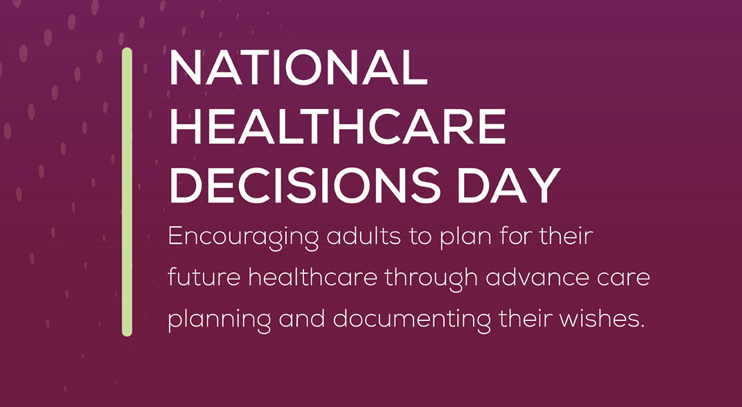
Talking about future care can feel difficult, but starting the conversation early often makes decisions easier later on. Many people begin by talking with a trusted family member or friend, reviewing reputable resources or exploring the types of documents used in advance care planning. National Healthcare Decisions Day 2026 is April 16. This annual day encourages adults to plan for future health care through advance care planning and documenting their wishes.